Genealogy Books

Google

General

Genealogy
Reference

America

Colonial
Alabama
Alaska
Arizona
Arkansas
California
Colorado
Connecticut
Delaware
Florida
Georgia
Florida
Hawaii
Hawaii
Idaho
Illinois
Indiana
Iowa
Kansas
Kentucky
Louisiana
Maine
Maryland
Massachusetts
Michigan
Minnesota
Mississippi
Missouri
Montana
Nebraska
Nevada
New England
New Hampshire
New Jersey
New Mexico
New York
North Carolina
North Dakota
Ohio
Oklahoma
Oregon
Pennsylvania
Rhode Island
South Carolina
South Dakota
Tennessee
Texas
Utah
Vermont
Virginia
Washington
West Virginia
Wisconsin
Wyoming
New England
Canada

Europe

Europe
Austria
Belgium
Denmark
England
Finland
France
Germany
Hungary
Iceland
Ireland
Italy
Luxembourg
Netherlands
Norway
Poland
Russia
Scotland
Spain
Sweden
Switzerland
Wales

Asia

Asia
China
Japan
Vietnam
Korea

Africa

Africa

Australia

Australia

Military

Military
American Revolution
Civil War

Religions

Religion
Baptist
Catholic
Islam
Mormon
Protestant

Software

Genealogy

Maps

Maps
Computer Mapping

HobbyDo


Search Now:

GENEALOGY BOOKS

Posted in Genealogy (Tuesday, September 7, 2010)

Fancy Nancy: My Family History (I Can Read Book 1) Written by Jane O'connor. By HarperCollins. Sells new for $3.99.
Read more...

Purchase Information
No comments about Fancy Nancy: My Family History (I Can Read Book 1).


Posted in Genealogy (Tuesday, September 7, 2010)

100,000 + Baby Names: The Most Complete Baby Name Book: Including 300+ Fascinating Lists, The Latest Naming Trends, Key to Gender-Neutral Names Written by Bruce Lansky. By Meadowbrook Press. The regular list price is $12.95. Sells new for $7.23. There are some available for $1.82.
Read more...

Purchase Information
5 comments about 100,000 + Baby Names: The Most Complete Baby Name Book: Including 300+ Fascinating Lists, The Latest Naming Trends, Key to Gender-Neutral Names.
  1. This book is filled with names for even the most picky Mommy or Daddy. It has helped name our son. Thanks!


  2. I bought this book so my husband and I can start the search for a baby name and sadly the search continues...but only because this book goes on forever! I like the size, but it can be a little overwhelming. If your looking for size this is your book, but if you don't need something in your hands the internet can do the same thing.


  3. Those are two of the names listed under "Brand" names for babies you might want to consider, along with "Pepsi" and "Disney". The lists that this book boasts are poorly constructed, repetitive, and often ridiculous. Food and beverage names include Pepper, Honey, & Ham.

    The dictionary listing of names is comprehensive, but although it lists every possible way you could dream up to spell (phoenetically or not) each name, there is no pronunciation guide. There are much more useful baby books available-if you are looking for a dictionary of names, get one with a pronunciation key, and if you are wanting a book of lists, I like the ones in the Baby Name Wizard book much better. They aren't perfect, but they are more realistic and seem less contrived. These lists are trying WAY too hard.


  4. good grief, this book has EVERY name. could have done without some of the different name origins. probably over half the names were of an origin i can't even pronounce so over half the book is useless to me. i guess in the way of 'comprehensive' name books, this one would probably win.


  5. Bought this book hoping to find something interesting- instead I spent so much time wading through hindi and islamic names I finally gave up on finding anything appropriate. The crowning moment was finding "Jihad" as a suggested name- oh dear. On top of that, the book doesn't give decent name meanings, and refers back to the originating name. So it's mainly full of "see _____" in the meanings. It's a waste of money. I love baby name books, and this one is too congested with ugly names to be overly useful to an American parent, unless they already know the name they want anyway.


Read more...


Posted in Genealogy (Tuesday, September 7, 2010)

The Everything Guide to Online Genealogy: A complete resource to using the Web to trace your family history (Everything Series) Written by Kimberly Powell. By Adams Media. The regular list price is $15.95. Sells new for $9.43. There are some available for $8.94.
Read more...

Purchase Information
5 comments about The Everything Guide to Online Genealogy: A complete resource to using the Web to trace your family history (Everything Series).
  1. This was my first book on Genealogy I purchased and it has been a big help, after I had started my family tree. It's packed with great information and on-line resourses and also, some samples of family tree research. A must have for your Genealogy library.


  2. Started researching family history a couple years ago, but was't making much headway. This book really has helped me get going and is improving my results. I purchased the book along with the Family tree maker 2010 software which is a much better than the previous editions. A great book to buy.


  3. Great book on online genealogy. I recommend it to anyone interested in this topic. Good tips and links also.


  4. What a fantastic book! The book is small enough to take along to the library yet filled with great information. The chapters are laid out very well which makes it easier to locate the info you need. There are tons of web sites listed that can help in research. The book lists free sites as well as paid sites. I would absolutely suggest this book as a tool in your genealogy research.


  5. My son bought this book for me for Mother's Day. I have been very pleasantly surprised with the quality of information in this book. I've been doing online genealogical research for 9 years and didn't expect to find helpful information in a book. LOL Thanks to my son, this book has opened up a whole new area of research into our ancestors. The Everything Guide to Online Genealogy: A complete resource to using the Web to trace your family history (Everything Series)


Read more...


Posted in Genealogy (Tuesday, September 7, 2010)

Working: People Talk About What They Do All Day and How They Feel About What They Do Written by Studs Terkel. By New Press, The. The regular list price is $16.95. Sells new for $9.87. There are some available for $3.48.
Read more...

Purchase Information
5 comments about Working: People Talk About What They Do All Day and How They Feel About What They Do.
  1. This book is OK. Some of the interviews are interesting, but a lot of them aren't, and many of them are just completely irrelevant in the 21st century. Not exactly a page turner.


  2. Put it by your bed. Read the stories of a couple of people every night.


  3. The book gets under the skin of the people talking about their jobs.
    Studs Terkel had the gift of getting foks to open up and tell their
    Story.


  4. Those of us who have worked for many years will find this book rings very true. Good reading if you are interested in work from many different perspectives.


  5. My review title makes it sound boring, but it was the only thing I could think of at the time :). This was my first in terms of reading a book like this, a sort of oral history as the author/publisher puts it of a multitude of Americans in different fields and professions primarily during the 1970's.

    Watching old documentaries and interviews just doesn't really do it for me when it comes to learning about the past and I was looking for something that would. So I happened to be in B&N one day - this was under the bargain priced books and I picked it up. Among the more exciting/interesting interviews are the life of a policeman, truck driver, car salesman, airline stewardess, hooker, garbage man, janitor, pharmacist, baseball & tennis players, fireman, and librarian.

    I'll just briefly recap a few of the ones above that really caught my interest. The truck driver was fascinating because at times I'd like to drive a truck for a few months at a time, but you learn just how involved you have to be and just how hard it is on your family over the long haul. It pays fairly well, but you have to contend with it just being me, myself, and I on the road for hundreds and hundreds of miles every few days. The driver makes it sound like if you enjoy talking to yourself and having intelligent conversation, then truck driving is indeed the job for you. I found that pretty amusing since I enjoy talking to myself [don't worry, I've concluded I'm not crazy! ;)]

    It's also interesting to learn about the life of a cop. Sure, you have all the jokes about them being overweight and eating donuts all the time and then the minority that abuse their power and make it into the news from time to time that give cops a bad name. Yet, in this book you really learn just how hard cops work to protect the general public and the politics that go on with being a cop and serving the public at the same time. I admit I still struggle with the stereotypes of cops being people that just abuse their power and look to pull people over for no reason, but it's accounts like those from this book that keep me open-minded about the profession.

    Last of the highlights is the garbage man. It's interesting in that I'd read in the past few years that they actually make a decent salary but who wants to put up with the stigma and dirty garbage that comes with the profession? Well, if you read the account of the garbage man interview from this book it might just change your mind a little bit. During the interview, Roy Schmidt talks about his family being well-taken care of and that he actually enjoys his job overall. Now that's one garbage mans account, but still the fact that this guy can provide for his family (at a relatively comfortable level) and respect himself at the end of the day really won me over during reading it.

    If nothing else, give this book a purchase for no other reason than the fact that now you can buy it for under $10 with shipping and for the interviews and snippets of them that I listed above. It's what a lot of us want to know about other jobs and how other people deal with the daily struggles/joys/tasks of their professions. I'd give this book a 4 out of 5. Not quite a 4.5 because I'd say one con is that it is semi-dated (but not badly dated, kind of like a good Dale Carnegie book) being primarily focused and written on/in the 1970's. That being said, it was a great peek at American workers and with a lot of the interviews the only things that are updated are labor conditions, salaries, and some of the tasks they perform.

    For a more updated version (that I'm currently reading) that focuses more on the 90's I believe, checkout Gig: Americans Talk About Their Jobs by John Bowe, Marisa Bowe, and Sabin Streeter).

    -Travis S.


Read more...


Posted in Genealogy (Tuesday, September 7, 2010)

Delirious New York: A Retroactive Manifesto for Manhattan Written by Rem Koolhaas. By Monacelli. The regular list price is $35.00. Sells new for $22.07. There are some available for $22.55.
Read more...

Purchase Information
5 comments about Delirious New York: A Retroactive Manifesto for Manhattan.
  1. A very inventive concept of New York's "culture of congestion" and how people are affected by the architecture they create. It is heavily researched and exhaustive, and after pretty much the third page I agreed with his concept of NY being "totally fabricated by man". What could of been a fascinating article becomes a spastic, heavy-handed read with a sledgehammer effect to your brain. (However,for those of us reading it for school, there are plenty of pictures that fill up the almost devastatingly vast 300+pages quickly.) It will scramble your brain with its thousands of nearly bumper-stickerish statements ("It hides life." "The Mountain MUST become architecture.") written with pretentious glee. However, I believe an independent scientific study has concluded that when pretending to read this book on the train people around you will assume your IQ is 40% higher than truth.


  2. through the exhaustive historiography of the phases of congestion coney island brought to manhattan, koolhaas provides a rather cynical view of the Grid as being an ulimatley neutral zoning system of constraining ideas that represent the continual decline of a phantastically realistic civilization, represented as mutated symbols of architecture in the "void" of repeated "pregnancies."

    it's really well written. funny. uses, like above, a somewhat inefficient vocabulary but remains in the same vein throughout. it is also a graphic design hubris consuming every page, even the left-justified text, showing off koolhaas's interpretation of the importance to combine scholarship and marketing.

    buy it. it's a very good book.


  3. While "Delirious" has its fair share of archispeak, Mr. Koolhaas pulls off an intelligent, fun and thought-provoking take on the early 20th century building culture of New York.

    One of the quirkier (and frankly, awesome/bravadoish) aspects of "Delirious" is Mr. Koolhaas's analysis of Coney Island: an "incubator for Manhattan's incipient themes." As a reader, one initially questions the inclusion of such a trashy place in such a lofty manifesto. However, as the chapter progresses, you start to see Mr. Koolhaas's iconoclastic brilliance. He pays an amazing homage to "the laboratory" that was Coney Island, illuminating the vital role it played in the building philosophies that would emerge later in Manhattan.

    Scattered throughout "Delirious," also, are compelling supporting images that Mr. Koolhaas clearly spent a lot of time digging up. In fact, flipping through the book for the images alone makes for a near-equivalent, and fun, learning experience.

    However, unlike his tasteful use of images, Mr. Koolhaaas's flamboyant use of scholarly English makes his writing difficult to digest at times:

    "It is probably inevitable that a doctrine based on the continual simulation of pragmatism, on a self-imposed amnesia that allows the continuous reenactment of the same subconscious themes in ever new reincarnations and on inarticulateness systematically cultivated in order to operate more effectively..."

    Given Mr. Koolhaas's journalism background (and assumed mastery of writing), I suspect he made the conscious decision to remain somewhat inaccessible to preserve his "lofty" image. While such a decision may be understandable, his brilliance as a writer often gets overshadowed by the sheer irritation of trying to understand him.

    Ultimately, "Delirious" proves itself to be a very intelligent synopsis---just as delirious and congested the themes Mr. Koolhaas puts forth. For the most part, it's a pleasure to read, and it also reflects the exhaustive research on Mr. Koolhaas's end. Much like Mr. Koolhaas's buildings, "Delirious" is on the cusp of being as grand as it intends to be.


  4. The author presents in concise fashion his own version of New York City's urban development history.

    One may or may not be convinced by his thesis that there is a specific New York City psyche that is reflected over time in a wide variety of constructions.

    But one can only be enthralled by his intimate knowledge of the City and of projects ranging from Coney Island to the Empire State Building to the 1964 World Fair.

    The surprising and at times bizarre illustrations add to the incredibly rich text. They include for instance a vintage photograph of famous architects actually costumed as their own creations: the Fuller Building, the Waldorf-Astoria, the Squibb Building, the Chrysler Building, etc.

    Written over 30 years ago and thus also a reflection of the 1970's, this work is definitely a classic well worth reading today for anyone interested in New York or in cities in general.


  5. I read this book on the train, to and from work. I'm an architect in NYC, so it seemed like a perfect place to read this book. There are some interesting case studies that lead to an interesting comparison of Le Corbusier and Salvidor Dali with their respect to architecture. Oddly enough, I end up liking Dali as an architect more than Le Corbusier.


Read more...


Posted in Genealogy (Tuesday, September 7, 2010)

A Village Lost and Found Written by Brian May and Elena Vidal. By Frances Lincoln. The regular list price is $60.00. Sells new for $33.50. There are some available for $36.00.
Read more...

Purchase Information
5 comments about A Village Lost and Found.
  1. Given as a gift. Recipients raved about this item. They were fascinated with the narrative about the 1850s English village, the 1850s technology and the application of that old technology by the current author.


  2. I must say this is a superb book. Look to the video review by Christoph64 for an overview of what this book is all about. This is a volume for those interested in photography, specifically stereoscopic photography, as well as for those interested and studying how people lived in 19th century Britain - with a focus on common village folk. The viewer which comes with the boxed book works well, though not as well as with my early 20th century viewer. I suggest, for those scenes which have special appeal and for personal use only, to have a print shop copy those particular scenes on card stock, and then cut them to size so they fit in an old-fashioned viewer. You will be amazed at what you will immediately see and how the scene pops to life.
    I want to thank Brian May and Elena Vidal for working on and producing such a fine volume so that many around the world can enjoy these examples of life in Victorian Britain. It truly looks to be a labor of love. It strikes me that this book would be a good introduction for children, as well as adults, to learn about life in another place and time. Incidentally, many of the views show hand-colored examples of this early photography. This is an example of how publishers can still produce books of a fine quality at what I think is a reasonable price.


  3. I saw Dr. May and this book presented at the 2010 National Stereographic Association convention. He seems a true Renaissance Man and probably the foremost public booster of traditional stereography.

    The book goes into many subtleties that casual stereo card fans may miss and will deepen their appreciation. For instance, modern stereographic pairs are often taken together simultaneously. But each picture in Williams' pairs were taken a minute or so apart and can show small, fun clues as to the difference between the time lag.

    While the book is beautifully produced, fans of digital or modern 3D, (like myself), should be aware that the time lags, hand coloring, and early printing methods of Williams' era can produce some discomforting "retinal rivalry" during viewing. Saying that, the included viewer, (which May helped design), is another testament to his passion and genius for the subject and it the most comfortable and handy print viewer I ever used.

    While May is quite knowledgeable about the pleasures of human 3D depth perception, his premise on how humans gained 3D depth-perception perplexed me. He states that it evolved to better see dangers and avoid predators.
    How could such an educated man in this field make such a misleading statement that ignores basic biology and evolution?

    The truth is: we evolved depth perception to BE the danger, not avoid it.

    Contrary to May's assertion, the mammals with the most evolved danger-avoiding vision use little, if any, depth perception. They tend to be grazers with side-mounted eyes (like rabbits, deer, & sheep) and use their wide, peripheral vision to detect the movements around them.

    Depth-perception evolved most in mammals with forward-set eyes (like cats, dogs, & humans). It evolved to help them track and chase down prey - not to just spot and run from other animals. This general side-eyed herbivore vs. front-eyed carnivore dichotomy is well understood in biology.

    Dr. May certainly knew of this. I can only suspect that his avowed vegetarianism is why he omits the carnivorous origins of our depth perception. While vegetarianism certainly has some valid health and ethical concerns, some of it's fringe philosophy has almost Creationist-like delusions about human anatomy and diet. Humans are omnivores like our primate cousins, and our stereo-vision evolved from hunting behavior. To say otherwise is like his fellow astrophysicists suddenly asserting a literal, seven solar-day beginning of the Universe.

    So, 3D fans might want to try a satisfying steak dinner after enjoying their next stereo viewing session. After all, these two pleasures have been inseparable for millions of years! (Just a little humor there, Brian!)


  4. I ordered this book for several reasons, but mostly because I read all about the search for this "lost" village a while ago on Brian May's website.

    Brian May (yes, the guitarist from Queen) had seen the series of stereophotographs by T.R. WIlliams, which were taken in the 1850's, but were only titled, "Scenes from Our Village". After searching and researching, he and his co-author Elena Vidal not only located the village, but also some of the structures from the images that are still standing today.

    Stereo images, if you are not familiar, are a pair of images of the same subject, taken at slightly different angles so that when viewed together, they create a 3-D effect similar to what we enjoy in computer-generated movies like Avatar and Toy Story 3. The same effect is also used in the 3-D pictures that you stare at until a hidden image appears within it. But these photos were taken over 100 years ago using glass plates in tripod cameras, and were originally viewed as photo pairs mounted ona card, using a hand-held viewer that was the forerunner of our View-Masters of the 1960's.

    This book is a compilation of the stereo image pairs from the series "Scenes from Our Village", along with a brief history and explanation of each image - who is in it, where it was taken, comments on the imaging techniques. Most fascinating is the amount of skill required to take duplicate still photos of people and children and nature using the methods of the day which required the subjects to remain in the same position for 5-10 minutes while the exposures were made. A stereo viewer that was included with the book allows easy viewing of stereo pairs as 3-D images, giving incredible depth and life to photos from 150 years ago when photography was in its infancy.

    The book also includes a brief history of the photographer, an in-depth description of the techniques and equipment used to create these 3-D image pairs, and a glossary of the photographic and imaging terms to help those unfamiliar with the topics and wonderful insights into the life and times in this village that was lost and found. Stereo images of the existing structures, sometimes from the same viewpoint as in the original photos, are also included.

    If you have any interest in photography, or of 3-D effects, or of the history of rural village life in the 1850's, this book is highly recommended.

    I had the great pleasure of attending a book signing event where these authors discussed all that went into the making of this book, and more tidbits of information about the images, which made looking through the book again even more enjoyable.


  5. This book is a time machine that transports you over 150 years into the past. It is obviously a labor of love, but more than that: history and art combined into a unique treasure. Reading it, you feel a connection to the past -- highlighted by 3D views of the past and present, juxtaposed together -- but you also gain a sense of how your own actions are building the yet-to-come future. Thanks to Brian and Elena for creating and sharing something so wondrous.


Read more...


Posted in Genealogy (Tuesday, September 7, 2010)

Inheritance: The Story of Knole and the Sackvilles Written by Robert Sackville-West. By Walker & Company. The regular list price is $26.00. Sells new for $12.77. There are some available for $10.69.
Read more...

Purchase Information
1 comments about Inheritance: The Story of Knole and the Sackvilles.
  1. [Review refers to U.K. edition]
    It is very old. The total number of rooms is somewhere very close to 365 (depends on your definition of room). There are 52 staircases (one for each week of the year) and within its grey ragstone walls, are the seven famed courtyards (one for each day of the week). As you might surmise, it's known as the "Calendar House." Completed in 1486, Knole in Kent in the United Kingdom epitomizes a British Stately Mansion.

    "Inheritance: The Story of Knole and the Sackvilles," by Robert Sackville-West is the storied history of the home, one of England's largest, and the 13 generations of Sackvilles who have inhabited the grand 15th-century building for more than four centuries.

    Vita Sackville-West, part of the Bloomsbury crowd and Virginia Woolf's great friend and lover, famously described her Sackville ancestors as "a race too prodigal, too amorous, too weak, too indolent and too melancholy; a rotten lot, and nearly all stark staring mad."

    Of Knole, she wrote "It has the deep inward gaiety of some very old woman who has always been beautiful, who has had many lovers and seen many generations come and go, smiled wisely over their sorrows and their joys, and leant an imperishable secret of tolerance and humour."

    Vita loved her childhood home but her gender prevented her from inheriting Knole when her father died. Instead, her uncle took over title and estate. Knole is now under the care and partial ownership of England's National Trust. The Sackvilles still call Knole home and have ownership of a sizable portion of the house and gardens.

    Charles Sackville, the 6th Earl of Dorset who occupied Knole in the late 1600s was certainly in the running for the most rowdy (randy, too) of Vita's rotten lot. Described as having twinkling eyes and a "podgy face," the Earl and a group of his drinking friends met for dinner on June 16, 1663 at the Cock Tavern in London's Covent Garden. Soon they were being served by "six naked women." Soon after that the women and Sackville along with two of his co-revelers proceeded to a balcony overlooking the street. All three of the men stripped naked and according to Samuel Pepys in his famous diary acted in "all the postures of lust and buggery that could be imagined."

    The lewd antics attracted a crowd and resulted in mayhem and broken shop windows. Charges of abuse of the "King's Peace" resulted in at least one fine of 2,000 marks, a substantial sum. By coincidence on the same day as the romp, lightning struck and heavily damaged the Sackville family mausoleum.

    The 6th Earl of Dorset is just one of the many Sackville portraits presented in the 440-year family history. Among those is lonely Lady Anne Clifford in the early 1600s, whose rake of a husband Richard Sackville, the 3rd Earl of Dorset, threatened to desert her and take custody of their daughter unless she signed over to him her family wealth. She didn't.

    The 3rd Duke of Dorset, John Frederick Sackville, is mentioned as a possible model for the Scarlett Pimpernel. There's the bachelor Lionel who in the 1860s fathered five children with his mistress, a Spanish dancer called Pepita. It was one of Lionel's illegitimate daughters, Victoria, who kept Knole in the family when she married her first cousin, another Sackville named Lionel. Victoria not only preserved the Sackville legacy, in 1902 she installed electric lighting.

    Today, upward of 80,000 visitors tred the halls in the public areas. Fifteen or so of the 365 rooms are currently open to visitors. The National Trust has plans to make many more of the rooms accessible to visitors. The author, who by right of male succession, holds title to the private areas lives with his wife and children in a suite of refurbished rooms along the building's south front. They have private access to one of the seven inner courtyards, the Pheasant Court. The Sackville family holds the lease on Knole for another 140 years.

    The book is titled "Inheritance" because it records a remarkable ancestry that has kept the home in the same family for more than four centuries. It's a thoroughly researched story with enough intrigue, heartbreak and goings-on for a lively full season of Masterpiece Theater. Knole is a grand building. Its walls enclose an incomparable history that in the telling becomes an extraordinary story. On a simpler plane it's a romp of a read.


Read more...


Posted in Genealogy (Tuesday, September 7, 2010)

On the Genealogy of Morals and Ecce Homo Written by Friedrich Nietzsche. By Vintage. The regular list price is $14.95. Sells new for $7.46. There are some available for $1.78.
Read more...

Purchase Information
5 comments about On the Genealogy of Morals and Ecce Homo.
  1. I read On the Genealogy of Morals for a graduate seminar on ethics, and in particular his writings regarding the virtue of courage. I found Walter Kaufmann's translation the best of several I looked at. Often regarded in philosophical circles as the first "postmodern" philosopher, Nietzsche is very critical to all of modernity's philosophical attempts to create a scientific or rationally based approach to ethics. Nietzsche's On the Genealogy of Morals is in part a refutation of Kant's ethical theory, arguing that Kantian ethics as well as other modern ethical theories were more interested in defining ethical values and not concerned with questioning their usefulness or whether they were derived from what Nietzsche believed were irrational psychological forces feeding people's illusions. Another purpose of the Genealogy is to examine the history of how morals were created in Western culture. Nietzsche's extensive philological studies of ancient Greek literature led him to argue that there needed to be a historical and psychological approach to understanding how ethical values came into existence. Thus, one of Nietzsche's goals in his Genealogy is to provide a critique of ethical values, such as courage, and to examine, "...the conditions and circumstances in which they grew, under which they evolved and changed." (456, GM I, 6). Another important aspect of Nietzsche's Genealogy is found in Nietzsche's ethical notions finding common ground with Aristotelian virtue ethics. Only Aristotelian virtue ethics can fit well with Nietzsche's moral ethics. Thus, I find that an interesting outcome of Nietzsche's examination of Greek culture leads him down a path back to the first evolutionary stage of the virtue of courage in particular, and to the classical Greek inception of virtue ethics in general. Nietzsche enthusiastically followed this path and reintroduced the world to the critical need for the classical Greek interpretation of the virtue of courage to help shape the "postmodern" world.

    Nietzsche recognized in ancient Greek poetry that heroes are not content with just living, but are compelled to perform courageous acts even at the peril of their own lives. In fact, for Greek heroes, gaining fame and glory at the expense of often suffering a courageous death seemed to be their raison d'ĂȘtre. Nietzsche recognizes this phenomenon in Greek poetry, which alerts him to the notion that the ancient and classical Greek citizens accepted the idea that part of the nature of life was that it could be tragic, dark, and foreboding; however, the Greeks who were noble of character did not despair. This notion was readily accepted by Aristotle but not by Plato, who thought that Greek tragedy taught the citizenry the wrong lessons about life. They knew that to be virtuous was to engage in a constant agon or [contest] to overcome the pitfalls of life. This literary fact causes Nietzsche to understand that like the ancient Greeks, the best of contemporary society, such as philosophers and artists whom he calls the "masters," have to rely on their virtues, such as courage, to constantly struggle to overcome life's limits. Nietzsche's observation of Greek culture leads him to define a theory of master and slave morality, which lays the foundation for his notion of returning to the classical Greek virtue of courage.

    Nietzsche understands master morality as the ideals of virtuous characteristics epitomized by the best of Greek aristocracy. On the other hand, slave morality according to Nietzsche, grew out of the Judeo-Christian ethic supporting love and justice over power. Master morality acknowledges "good" and "bad" in the world; while slave morality acknowledges "good" and "evil." Nietzsche recognized the masters as "active" people, and whatever helps them achieve greatness is good. Thus, Nietzsche defines the good and bad characteristics in master morality in the following way. Character traits such as courage, conquest, aggression, and command that engender the feelings of power in people are deemed `good,' while traits of weaker people such as cowardice, passivity, humility, and dependence are deemed `bad.' Furthermore, Nietzsche argues that within the master and slave morality what is good can only be good for the master, because the slave morality is essentially based on a number of opposing ideals from the master morality. Therefore, an important argument for Nietzsche is, that according to slave morality, anything that opposes, destroys, or conquers is evil and should be eliminated from human relations. Nietzsche argues that slave morality espouses humility, selflessness, and kindness as ruling traits for all people as a condition of self-perseverance against master morality. These are all character traits central to Judeo-Christian morality, and are diametrically opposed to the aggressive character traits of the master morality, which were central to the power of the Roman Empire when Christianity was conceived. Against the backdrop of master and slave morality, Nietzsche examines the classical Greek cardinal virtues, and he specifically looks into the virtue of courage, which is so central to master morality.

    When Nietzsche contemplates the future of virtues, he laments the lack of courage displayed by people in modern society. Nietzsche sounds a clarion call for artists to once again courageously take their place as masters of society. Nietzsche sees courage as something which is good for the people who have it, in that it enables them to win contests which they would lose without it. In addition, Nietzsche recognizes that in order for people to act courageously, they also need to overcome their emotions of fear. "But there is something in me that I call courage; that has so far slain my every discouragement." Once again, Nietzsche is using Aristotle's virtue ethic model of practical reasoning to show that a person with noble intentions, or in Nietzsche's parlance, a master can will themselves to overcome their fears. After examining Nietzsche's extensive writings on the history of ethics, I find that his description of courage fits well within the classical Greek model of the virtue of courage.

    Nietzsche's philosophical project pertaining to the virtue of courage is centered on the idea that those who were the masters in Greek society actually desired to face and conquer dangerous situations. In essence, Nietzsche demilitarized the Greek emphasis on battlefield courage and applied it to the people he thought could be the masters of society of his time and into the future--artists and philosophers. The power Nietzsche yearns for is the power of creative activity. Creativity is the "will to power" that this much maligned philosopher was truly advocating.


  2. I should note up front that my review refers to the Vintage edition--the review and the rating pertain to Kaufmann's translation only, not to Nietzsche's text. Nietzsche's work is a classic and should be read by anyone with an interest in philosophy or related fields. That point, I think, goes without saying. What does need to be said is which translation you should choose to read it in. Kaufmann's is, pretty much, the standard translation. And, for the most part, his translation is true to Nietzsche's German. But it suffers in one important way, and that is how it conflates Hegel's idealism and Nietzsche's thought through the use of a Hegelian, idealist vocabulary. To be sure, Nietzsche draws on Hegel a lot, but Kaufmann's translation misleads the reader into thinking that there are more similarities than there actually are. It also makes this translation unbearably difficult to read.

    The second problem I have with this particular edition is that Kaufmann's notes are so shallow, and not really helpful at all. A perfect example is on the first page of the first essay, where Nietzsche abandons his native German for a moment and refers to the English Psychologists pushing the "partie honteuse" of our inner world into view. Kaufmann leaves the phrase untranslated, as he ought, and lets a note do the work of translating it. His note says simply, "shame." In my view, it may be as if he had just omitted the note altogether, because this tells me almost nothing about what Nietzsche means, and doesn't even attempt to get at his metaphor. If one were to turn to Clark and Swenson's translation, put out by Hackett (On the Genealogy of Morality), however, one would learn that the phrase means "shameful part" and when pluralized it is equivalent to the English phrase "private parts." This is a helpful note which explains Nietzsche's metaphor and the connotations he's aiming for.

    I'll give this edition three stars because I have to compare it to others, such as Clark and Swenson's, above, or Douglas Smith's translation in the Oxford World Classics edition (On the Genealogy of Morals: A Polemic. By way of clarification and supplement to my last book Beyond Good and Evil (Oxford World's Classics)). In many ways Smith most avoids the "Hegel-ization" of Nietzsche (although it is possible to overdo it, and Smith might be guilty). But in my estimation, Clark and Swenson's is the best, deserving five stars, and Smith's is a close second, perhaps deserving four and a half, or four and three-quarters, not least because Clark and Swenson's notes are better. (Smith's would get five stars if I reviewed it.) Kaufmann's is so far behind these that I cannot justify giving it more than three stars. For a more formulaic, objective approach, you can subtract one star from the translation for at times confusing Nietzsche's thought, and doing so in a confusing way, and subtract one from the edition in general for having mediocre notes. Then you also end up with my three-star rating.


  3. "The Genealogy of Morals" is one of the more straightforward and easily-comprehensible of Nietzsche's philosophical works. It is a sustained focus on a single topic - the origins of morality - and is comprised of three related essays which explore morality and the nature of "ressentiment," or "suppressed resentment." According to Nietzsche, "ressentiment" is the fundamental motive force, the "will to power," of the religious (specifically the Christian)temperament and character, and results in moral and spiritual corruption: hence Nietzsche's claim that Christianity is the greatest of all evils because it fosters, nurtures, and embodies "ressentiment." Although Nietzsche's diatribes against the Christian religion sometimes get tedious, his psychological analysis of the origins of morality is insightful and intriguing.

    The companion piece in this edition, "Ecce Homo," is one of the most entertaining and fascinating autobiographies ever written. Nietzsche recounts events, people, and places that were important to him personally and significant for the development of his philosophy; he offers summaries and "humble" appraisals of his philosophical works (appraisals which are as provocative as they are "humble"); and he claims to have destroyed Christianity and invented psychology -- and while these claims sound exaggerated, they're true from a Nietzschean perspective. With Nietzsche's own commentary on the meaning and significance of his books, "Ecce Homo" is a wonderful introduction to his philosophy and a literary experience.


  4. In his characteristic raging style and with a sometimes obscene vocabulary, Friedrich Nietzsche shouts (`Am I understood?') his vision on the origin of morals (good, bad and evil), of guilt and bad conscience and on the value of ascetic ideals.

    The origin of morals
    The antithesis good-bad was established by `noble' rulers who seized the right to create their own values. They called their egoistic actions good, which means `of first rank'. Who were these masters? At the bottom all these noble races were `blond beasts of prey in search of spoil, living the voluptuousness of victory and cruelty.'
    It was only when the aristocratic value judgments declined that the slaves (other names: the herd, the plebeians, the low, the mob, cellar rodents, insects, the oppressed, the downtrodden, the worm-eaten) could impose their own morality of unegoism, pity, self-sacrifice and self-abnegation on mankind.
    The moral revolt of the slaves began when their ressentiment became creative. This ressentiment is an imaginary revenge, a brain-sickness, by those who are denied true action. The egoistic `good' of the rulers became `evil'.
    However, the slave morality is an illness based on the phantasmagoria of anticipated bliss, the `Last Judgment'. It is anti-life and a danger for the species `man'.

    Guilt, Bad Conscience
    Guilt has its origin in `debts', in the contractual relations between creditor and debtor, in which the latter pledged that if he should fail to repay, he would substitute his debt by something else that he possessed (body, limbs, wife, freedom).
    The origin of bad conscience comes from the internalization of instincts which couldn't discharge themselves. All those instincts of the wild, free, prowling man (cruelty, destruction) turned against man himself, because the political organization (the State) protected itself against these old instincts of freedom.
    Real masters don't know what guilt is. One day, the man of the future, the Antichrist, will come, as a sovereign individual, liberated from the slave morality. He will call his dominating instincts his conscience.

    Ascetic ideals
    The three slogans of the ascetic ideal are poverty, humility and chastity.
    But, an ascetic planet is a nook of disgruntled, arrogant creatures filled with a profound disgust of themselves, of the earth, of all life.
    Ascetic life is a self-contradiction. It is an attempt to employ force to block the wells of force, beauty and joy. Its pleasure is sought in decay, pain, ugliness, voluntary deprivation, self-mortification, self-flagellation.
    The allies of the ascetics are the scientists (`these trumpeters of reality are bad musicians'), with their belief that truth cannot be criticized (?) and with their aim to dissuade man from his former respect for himself.
    What we need is the freedom of `Nothing is true, everything is permitted.'

    Evaluation
    The powerful, the beasts of prey use(d) religion and its slave morality as a means to keep their power and wealth intact. The many accepted it, until in some countries general free elections (democratic rule) put the power base of the beasts in danger. The beasts had a new problem to face: how to control democracy.
    Nietzsche's anti-democratic, anti-scientific, barbaric, full spectrum egoistic rule is unacceptable and indefendable in our `enlightened` world.
    However, his shout to mankind to wake up and to live a real `human' life, free from a slave morality, is still highly needed and even more than ever before.

    These brutal, raw, blasphemous essays didn't loose one ounce of their invective and polemic power. A real catharsis.
    A must read for all Nietzsche fans, but with the necessary caution.


  5. The translation is very good in this book and it has enough remarks from the translator to not be overwhelming but still give you the information you need to understand some of the things Nietzsche references from his time. The paper and binding are a good quality. The way I read tends to wear down bindings, but this one had no trouble.

    The content itself is great. Genealogy of Morals is extremely insightful into the human psyche and explains very well where a lot of our morality stems from. What's even more interesting, in my opinion, is that he talks at length about what the psychology of this morality causes in society.

    Ecce Homo is great on another level. It's rare to see a great thinker make great note of his faults. He talks about his thought process for each book he wrote. While this may not seem greatly informative I think this books main purpose it to encourage people to not deify him the way we tend to do with long dead figures.

    Nietzsche is a great writer, but if this is your first book of his I would strongly recommend reading it in entirety before agreeing or disagreeing with it. He likes to speak in extremes. I find this a great approach when it comes to understanding his entire book, but it's easy to get the wrong idea if you only read part of it. For instance, he's call the Jews some of the most harmful forces in human history and then many pages later (and with some of these things even books later) he will say that despite that their general mentality is essential to our survival and that any form of antisemitism is horrifically misguided. In general it's best not to quote Nietzsche, rather paraphrasing tends to be more accurate. He writes so that you have to actually read his work, not just read the wiki on him.


Read more...


Posted in Genealogy (Tuesday, September 7, 2010)

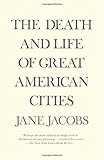
The Death and Life of Great American Cities Written by Jane Jacobs. By Vintage. The regular list price is $16.00. Sells new for $9.00. There are some available for $8.98.
Read more...

Purchase Information
5 comments about The Death and Life of Great American Cities.
  1. Jacobs argues masterfully against the popular assumption that urban density leads to slums and decay. Instead she describes how a dense concentration of people gives a city vitality and provides a built-in source of security through "eyes on the street". Throughout the book she discusses various ways to achieve this density and manage the vitality it brings, all the while challenging misconceptions about how cities work.


  2. My son is a college senior who is taking a seminar class in urban studies. He was born in Manhattan so it was not a surprise that he should develop an interest in the subject. While I was purchasing another 'leisure read' to send to him, I saw this book as a suggested other possibility. It got very high marks in all the reviews and I thought it would be a great addition to his collection of books in this area. I was not wrong. He loved the book and when he brought it to class, his professor was delighted that he had a copy and called it "the classic for studies of cities". He has even introduced me to Jane Jacobs' work as he reads more and more of this book. I hope to read it from cover to cover when he brings it home from college later this year.


  3. In spite of the modest shortcomings that have emerged with age, I still have a deep and abiding fondness for this book... after all, it is what decided me on a career change into urban planning. And unlike much of the specialist literature that I've had to read since then, this book is thrilling, passionate, accessible, and inspiring.

    For me, at a certain point -- probably about 2/3rds of the way through Death and Life -- Jacobs seems to start to repeat herself a bit, but many of her insights as to what creates vibrant neighbourhoods and vibrant cities remain as applicable today as they were when she was feuding with Robert Moses over the future of the West Village. This book should be required reading for all planners, highway engineers, and developers; many neighbourhood associations would also probably be the better for having a copy to hand.

    But Jacobs' greatest strength, I believe, is that she combines great insight with clear prose that is devoid of the 'fancy' specialist terminology that practicing planners and academics use to talk about the forces driving change in neighbourhoods, towns, and metropolises. Anyone can read this book, and everyone should.


  4. I was introduced to this book in about 1970 by a girl who'd completed an M.A. on England's first council estate. Both she, and this book, impressed me. I now have, thanks to Amazon, a plump 'Modern Library' Edition, thicker but of similar dimensions to that paperback. It was first published in 1961 as a single volume; but 'portions' were published before this. So this dates to the late 1950s/ 1960.

    Jacobs was not popular with architects; I had an architect's journal of the relevant date which snipes at her.

    What suddenly occurred to me and causes me puzzlement now is the fact that some towns known to me, in England - e.g. Reading, Blackburn, Bristol I think, parts of London - had their Victorian guts removed AFTER 1960 - typically in the 1970s. (Test yourself here: if you're old enough, and took an interest, when did rebuilding take place? If not, check the history of a town known to you. And I was struck by the fact that nothing at all, not one thing, remained of Atlanta, Georgia, from the 19th century). Suggesting, or proving, that she was ignored, or at least that greater powers defeated her.

    IF Jane Jacobs was so influential, how come a lot of what she preached against, took place long after her book? Let me suggest a possibility: maybe Jane Jacobs knew perfectly well - after all, her husband was an architect - that fortunes could be made by demolishing old housing and filling the land with apartments, malls, and the rest. Nothing mysterious about that. And trams, trains, buses, transit schemes could be elbowed out in favour of more profitable private transport. Why not write about this, and how, in her view, cities could be remodelled or developed or left or improved in optimum ways? In fact this book is descriptive, but low on analysis. Compare Chomsky: he wrote on the Vietnam War. How many American generals or airforce people were condemned as war criminals? What actually happened? The answer is - nothing. Even utter ***^ like Kissinger gets kid glove treatment. Maybe Jane Jacobs is in the same mode as regards towns? Could she have been a decoy, an irrelevance, trotted out to pretend something is being done, peoples' deep concerns are being addressed? Someone, please, show I'm wrong.


  5. Perhaps the best feature of Jane Jacob's writing is her often understated wit and sarcasm. Pow! She let's a zinger go where you were expecting her to obligatorily remain severe and staid. Her style is extremely accessible and while she is not the first to speak of urbanism, I do believe she could be considered the powder keg for the latter half of the 20th century, rousing others to action and study. It is a shame Jacobs and Mumford did not have an interview session of the likes of Gore Vidal and William F. Buckley, instead we will have to refer back to the sparring on the the page


Read more...


Posted in Genealogy (Tuesday, September 7, 2010)

Legacy: A Novel Written by Danielle Steel. By Delacorte Press. The regular list price is $28.00. Sells new for $15.12.
Read more...

Purchase Information
No comments about Legacy: A Novel.


Page 1 of 250
1  2  3  4  5  6  7  8  9  10  11  20  30  40  50  60  70  80  90  100  110  120  130  140  150  160  170  180  190  200  210  220  230  240  250  
Fancy Nancy: My Family History (I Can Read Book 1)
100,000 + Baby Names: The Most Complete Baby Name Book: Including 300+ Fascinating Lists, The Latest Naming Trends, Key to Gender-Neutral Names
The Everything Guide to Online Genealogy: A complete resource to using the Web to trace your family history (Everything Series)
Working: People Talk About What They Do All Day and How They Feel About What They Do
Delirious New York: A Retroactive Manifesto for Manhattan
A Village Lost and Found
Inheritance: The Story of Knole and the Sackvilles
On the Genealogy of Morals and Ecce Homo
The Death and Life of Great American Cities
Legacy: A Novel

Copyright © 2005
*Amazon.com prices and availability subject to change.
Last updated: Tue Sep 7 07:43:23 PDT 2010